www thehometrotters .com represents a broad home-improvement and interior-design concept built around practical ways to make a home more attractive, comfortable, functional, and personal. The combined content covers everything from simple decorating changes and DIY projects to renovation planning, maintenance, organization, outdoor living, and smart-home technology.
A recurring idea throughout the content is that a better home does not always require an expensive makeover. Small, intentional improvements can change how a room looks and how people use it. The approach combines design inspiration with practical guidance, making it relevant to homeowners, renters, DIY enthusiasts, and people working with limited space or budgets.
What www thehometrotters com Covers
The overall content can be organized into several connected areas:
| Main Area | What It Covers |
|---|---|
| Home Decor | Colors, textures, furniture, artwork, accessories, and seasonal styling |
| DIY Projects | Furniture painting, shelves, gallery walls, wallpaper, and decorative planters |
| Renovation | Kitchens, bathrooms, living spaces, materials, planning, and improvements |
| Home Repairs | Plumbing, electrical, roofing, and HVAC maintenance |
| Organization | Kitchen, closet, garage, and small-space storage |
| Smart Home | Thermostats, lighting, locks, cameras, and voice assistants |
| Outdoor Living | Seating, lighting, fire pits, garden beds, pathways, and patio furniture |
| Sustainability | LED bulbs, efficient appliances, recycled materials, and low-flow fixtures |
| Design Inspiration | Modern, Scandinavian, farmhouse, contemporary, and personalized interiors |
The common thread is practical improvement rather than decoration for appearance alone.
The Main Design Philosophy
One of the strongest ideas across the content is intentional design.
A room should not simply contain attractive objects. Furniture, lighting, storage, artwork, and accessories should support the way the room is actually used.
For example, a family room should provide comfortable seating for movie nights, while a home office should support productivity. If a chair is never used, removing it may improve the room more than adding another decorative item.
This creates a simple principle:
Design for how you live first, then decorate around that lifestyle.
Home Decor: Making Rooms Personal
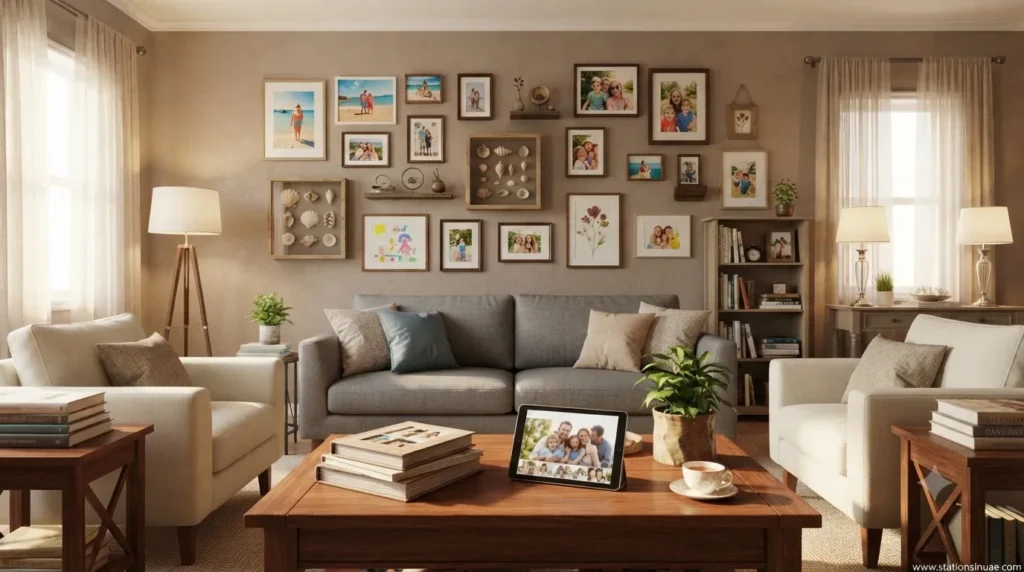
The decorating guidance emphasizes personality, functionality, color, texture, and meaningful objects.
Useful elements include:
- Artwork
- Lighting
- Textiles
- Decorative accents
- Personal photographs
- Travel souvenirs
- Family heirlooms
- Different materials
- Mixed textures
- Statement accessories
The goal is to create visual depth without making the room feel crowded.
Living Room
A living room can become more comfortable and visually balanced through a few targeted changes:
- Use an appropriately sized area rug.
- Place the front legs of seating furniture on the rug.
- Combine ceiling lighting with floor and table lamps.
- Hang curtains higher and wider than the window frame.
- Use one strong artwork piece or a small gallery arrangement.
- Create furniture zones around conversation and movement.
- Remove furniture that does not serve a purpose.
Layering is particularly important. Instead of relying on one overhead light, combining several sources creates a warmer and more flexible atmosphere.
Bedroom
Bedroom recommendations focus on comfort and visual calm.
A practical arrangement can include:
- Layered bedding
- 2–3 bedding tones
- A rug beneath approximately the lower two-thirds of the bed
- Bedside lamps
- Minimal visible decoration
One suggested styling formula is:
1 lamp + 1 object + 1 small book stack
This keeps the bedside area useful without creating unnecessary visual clutter.
Kitchen
Kitchen decoration should remain functional.
Ideas include:
- A ceramic bowl
- Matching storage jars
- A stacked cutting board
- Cohesive dish towels or runners
- One framed print or small plant
- Clear countertops
- Open shelving where appropriate
The principle is to decorate the kitchen without reducing useful working space.
Bathroom
A simple bathroom refresh can use:
- Matching towels
- 1 natural texture such as wood, stone, or rattan
- 1 small plant
- Clear surfaces
- Better mirrors
- Floating vanities
- Decorative storage baskets
- Stylish faucets
These changes can improve the room without requiring a complete renovation.
Entryway
The entryway can combine storage and visual appeal with:
- A slim console
- A mirror
- A small key or mail tray
- 1 lamp or vase
The purpose is to create an organized transition between the outside world and the main living area.
Children’s Rooms
Children’s spaces require a stronger balance between design and safety.
Recommended features include:
- Multifunctional furniture
- Rounded edges
- Stable furniture
- Designated toy storage
- A suitable desk
- Reading light
- Separate areas for play and rest
The emphasis is on creating a room that can support several activities while remaining safe and organized.
Color and Texture
Color can establish the atmosphere of an entire room. Suggested palettes include:
- Soft blues
- Greens
- Oranges
- Yellows
- Neutral shades
Color-wheel theory and complementary colors can help create visual harmony.
Texture provides another layer of interest. Examples include:
- Soft throws with a leather sofa
- Glass combined with wood
- Rigid shapes paired with softer lines
The objective is not to fill the room with different materials, but to create enough contrast to give the space depth.
The 80/20 Color Rule
One useful decorating guideline is the 80/20 approach:
- 80% of the room can remain within the primary color family.
- 20% can be used for accent colors.
This provides a controlled way to introduce stronger colors without overwhelming the space.
Furniture Arrangement and Room Flow
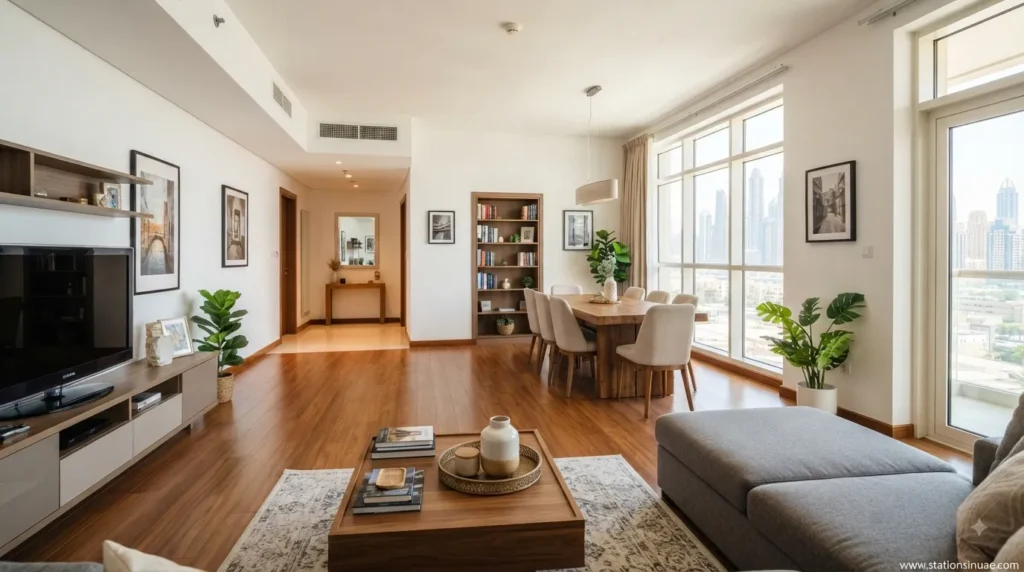
Furniture placement affects both appearance and usability.
The content recommends arranging furniture around:
- Conversation
- Flow
- Function
Examples include:
- Chairs facing each other
- Floating a sofa rather than automatically pushing it against a wall
- Creating distinct zones within a large room
- Removing unnecessary furniture
A successful layout should allow people to move comfortably while making the intended activity of the room obvious.
Artwork and Gallery Walls
Artwork should be selected according to:
- Scale
- Style
- Personal meaning
A large canvas can serve as a focal point, while smaller works can complement it.
For a gallery wall, a practical method is to:
- Start with a central piece.
- Build outward.
- Mix different sizes.
- Combine compatible styles.
- Maintain balanced spacing.
- Add meaningful photographs or personal treasures.
This creates a collection that feels intentional rather than randomly assembled.
The 3-5-7 Styling Rule
Another measurable decorating concept is the 3-5-7 rule.
Decorative objects can be grouped in sets of:
- 3
- 5
- 7
Odd-number groupings are presented as a way to create a more natural-looking arrangement.
This can be applied to shelves, consoles, coffee tables, open storage, and decorative displays.
Travel-Inspired Interior Design
Travel and cultural influences can add personality without turning a room into a themed space.
The suggested approach is to use:
- 1–2 cultural influences per room
- 2–3 recurring colors
Examples include:
- Mediterranean ceramics
- Moroccan textiles
- Destination photography
- Azure blue
- Terracotta
- Warm white
The important point is restraint. Cultural references work best when they complement the overall room instead of dominating it.
Four Major Interior Styles
The combined content highlights several recognizable design directions.
Modern Minimalism
Typical characteristics include:
- Neutral colors
- Simple furniture
- Open layouts
- Natural lighting
- Functional decoration
Scandinavian Design
Common elements include:
- White walls
- Wooden furniture
- Soft textiles
- Indoor plants
- Cozy lighting
Farmhouse Style
This style can include:
- Reclaimed wood
- Vintage accessories
- Shiplap walls
- Open shelving
- Warm neutral colors
Contemporary Living
Contemporary spaces often use:
- Clean architectural lines
- Bold lighting
- Mixed materials
- Statement furniture
- Large windows
These styles can also be mixed rather than followed strictly.
Small-Space Design
Limited square footage does not necessarily mean limited functionality.
The recommended solutions include:
- Multifunctional furniture
- Vertical storage
- Foldable tables
- Hidden storage compartments
- Mirrors for visual depth
The basic strategy is to use vertical space, remove unnecessary items, and select furniture that performs more than one function.
DIY Projects
DIY is another major part of the content.
Five highlighted project categories are:
- Painting furniture
- Building shelves
- Creating gallery walls
- Installing peel-and-stick wallpaper
- Making decorative planters
These projects are presented as relatively accessible improvements that generally require limited tools and experience.
The broader DIY approach also includes furniture restoration, wall painting, crafts, upcycling, and practical home repairs.
Budget-Friendly Home Improvements
A major theme is that visible improvements do not always require a large investment.
| Common Problem | Practical Solution | General Cost Level |
| Room feels flat | Rugs, cushions, curtains | Low |
| Room feels cold | Warm table or floor lamp | Low |
| Room feels cluttered | Remove unnecessary items | Free |
| Room feels plain | Art, mirror, or gallery wall | Low–Medium |
| Room lacks personality | Books, travel finds, family photos | Low |
| Bedroom feels dull | Bedding, lighting, and rug | Medium |
| Furniture feels chaotic | Regroup or remove pieces | Free |
Other affordable upgrades include:
- Fresh paint
- New cabinet handles
- Updated curtains
- Decorative cushions
- LED lighting
- Indoor plants
The overall message is to prioritize changes that improve both appearance and everyday use.
Home Renovation and Maintenance
Renovation should be approached with planning rather than impulse.
The broader content includes:
- Kitchen optimization
- Bathroom optimization
- Living-area improvements
- Material recommendations
- Renovation materials
- Cost breakdowns
- Installation guidance
- Troubleshooting
- Safety protocols
- Construction-standard information
Maintenance is equally important because attractive design cannot compensate for neglected systems.
Four Major Repair Areas
| Area | Recommended Attention |
| Plumbing | Leaking faucets, water pressure, drains, pipe connections |
| Electrical | Damaged outlets, light fixtures, smoke detectors, wiring |
| Roofing | Shingles, leaks, drainage, flashing |
| HVAC | Filters, vents, inspections, energy efficiency |
The content specifically highlights annual roof inspections and annual HVAC inspections.
Regular maintenance can prevent small problems from becoming expensive projects.
Smart-Home Improvements
Six smart-home categories highlighted in the content are:
- Smart thermostats
- Video doorbells
- Smart lighting
- Voice assistants
- Security cameras
- Smart locks
These technologies are presented mainly around convenience, security, and potentially improved energy efficiency.
The important consideration is to select technology that solves an actual household problem rather than adding devices simply because they are available.
Home Organization
Organization is treated as part of good interior design.
Kitchen
Useful solutions include:
- Drawer dividers
- Pantry containers
- Labeling systems
- Pull-out shelves
Closet
Ideas include:
- Matching hangers
- Shoe organizers
- Seasonal storage bins
- Vacuum storage bags
Garage
Possible systems include:
- Wall-mounted storage
- Pegboards
- Tool cabinets
- Ceiling storage racks
Good organization can make a room feel larger without changing its physical dimensions.
Outdoor Living
Outdoor areas can function as extensions of indoor living space.
Six highlighted improvements are:
- Garden lighting
- Outdoor seating
- Fire pits
- Raised garden beds
- Decorative pathways
- Patio furniture
The emphasis is on creating outdoor areas that are comfortable, useful, and visually connected to the rest of the property.
Sustainable Home Design
The sustainability section focuses on practical changes rather than complicated systems.
Six highlighted practices are:
- LED bulbs
- Energy-efficient appliances
- Rainwater collection
- Solar lighting
- Recycled materials
- Low-flow plumbing fixtures
These measures are presented as ways to reduce environmental impact and potentially lower utility costs.
Seasonal Decorating
Seasonal decoration does not require a complete redesign.
The four-season approach includes:
| Season | Suggested Direction |
| Spring | Fresh flowers, bright colors, lightweight fabrics |
| Summer | Coastal decor, outdoor entertaining, natural textures |
| Autumn | Warm tones, pumpkins, cozy blankets |
| Winter | Soft lighting, holiday decorations, layered textiles |
Smaller changes such as cushion covers and centerpieces can refresh a room without replacing major furniture.
Timeless Design vs. Trends
A practical interior can combine timeless furniture with current trends.
The recommended balance is:
Timeless furniture = long-term foundation
Current trends = flexible updates
This approach reduces the need for frequent major changes while still allowing a home to feel current.
Expert and Content Information
The main TheHomeTrotters content describes contributors including:
- Interior designers
- Architects
- DIY specialists
- Home inspectors
The stated contributor experience is 5–15 years.
Credentials and professional references mentioned include:
- NCIDQ
- ASID
- AIA
- LEED
- NARI
- CAPS
- ASHI
- InterNACHI
The main guide also claims:
- 25–30 new pieces monthly
- Quarterly contributor training
- Industry and building-code updates
- Weekly design tips
- Bi-weekly project guides
- Monthly tool libraries
- Daily expert consultations
These figures are part of the supplied competitor content and describe how the platform presents its authority and publishing structure.
The Most Practical Takeaway
The combined message behind these home-design resources is straightforward: a successful home is not created by filling every room with expensive products.
Instead, improvement comes from understanding the space, removing unnecessary elements, choosing functional furniture, controlling color and texture, adding meaningful decoration, and maintaining the property properly.
A practical sequence is:
- Declutter the room.
- Identify how the space is actually used.
- Improve furniture placement and movement.
- Establish a controlled color palette.
- Add lighting and texture.
- Introduce meaningful artwork or accessories.
- Improve storage where necessary.
- Make small seasonal changes.
- Maintain essential home systems.
- Add technology or renovation features only when they provide real value.
This approach makes home improvement more manageable because it separates essential changes from optional decoration.
Final Thoughts
The combined content around www thehometrotters .com presents home improvement as a balance between aesthetics, function, maintenance, personality, and practical decision-making. Its strongest ideas are not about following a single design style but about creating spaces that support everyday life.
From the 80/20 color approach and 3-5-7 styling rule to small-space organization, DIY projects, annual maintenance, smart-home upgrades, and seasonal decorating, the recommendations can be applied gradually. The result is a home that feels more organized, comfortable, personal, and useful without requiring a complete transformation every time the style changes.