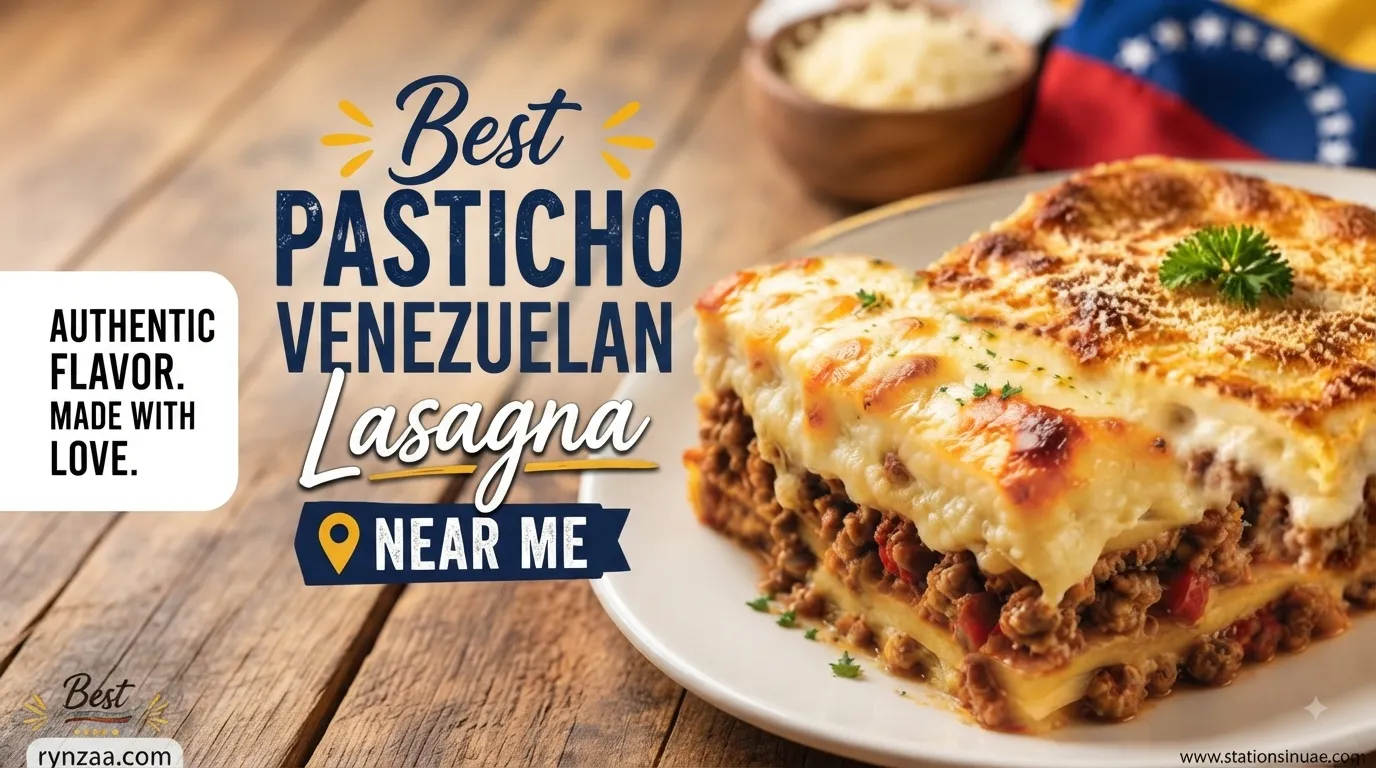
What Is Pasticho?
Pasticho is Venezuela’s distinctive interpretation of Italian lasagna. It combines layered pasta with a rich meat sauce, creamy béchamel, melted cheese, and a long baking process. While it shares its basic structure with Italian lasagna, Venezuelan preparation often produces a softer, creamier texture with a mild sweet-and-savory flavor.
Italian immigration played an important role in the dish’s development in Venezuela. After World War II, thousands of Italians settled in Venezuela and brought cooking traditions that gradually blended with local ingredients, family recipes, and Venezuelan tastes.
Today, pasticho is strongly connected with family meals, celebrations, and Venezuelan culinary heritage.
It is commonly served at:
- Birthdays
- Christmas and other holidays
- Graduations
- Sunday lunches
- Family reunions
- Weekend gatherings
- Community celebrations
What Makes Venezuelan Pasticho Different?
The main difference is the balance between pasta, meat sauce, béchamel, and cheese. Venezuelan pasticho generally has a creamier and softer character than a more structured Italian lasagna.
| Feature | Venezuelan Pasticho | Traditional Italian Lasagna |
|---|---|---|
| Origin | Venezuela | Italy |
| Texture | Soft and creamy | More structured |
| Meat sauce | Rich and savory | Often tomato-forward |
| Béchamel | Usually generous | Varies by regional recipe |
| Cheese | Often generous | More balanced depending on recipe |
| Flavor | Savory with possible sweetness | Herbaceous and savory |
| Family variations | Very extensive | Often region-specific |
| Plantains | Sometimes included | Uncommon |
Sweet elements can come from ingredients such as plantains, raisins, or particular seasoning combinations. Some recipes also include ham or bacon, creating an even richer flavor.
Traditional Pasticho Ingredients
A classic preparation usually combines several layers and components rather than relying on a single sauce.
| Ingredient | Typical role |
|---|---|
| Lasagna noodles | Create the layered structure |
| Ground beef | Main savory protein |
| Tomato sauce | Foundation of the meat sauce |
| Onion | Adds depth and sweetness |
| Garlic | Aromatic flavor |
| Bell peppers | Adds flavor and color |
| Mozzarella | Melted cheese layer |
| Parmesan | Richness and topping |
| Béchamel | Signature creamy component |
| Butter | Béchamel base |
| Flour | Thickens the béchamel |
| Milk | Creates the creamy sauce |
Depending on the household or restaurant, pasticho may also contain ham, bacon, chicken, pork, black olives, raisins, sweet plantains, extra herbs, or mixed cheeses.
Gouda, Edam, and Venezuelan white cheeses can also appear in different preparations.
Popular Pasticho Variations
There is no single recipe used everywhere. Venezuelan families and restaurants can adapt the dish according to region, ingredients, and personal tradition.
Classic Beef Pasticho
This is the most familiar version, using ground beef, tomato sauce, aromatics, béchamel, pasta, and cheese.
Chicken Pasticho
Chicken replaces or supplements beef. It can be useful for people who prefer a lighter-tasting meat option.
Mixed-Meat Pasticho
Some preparations combine different meats, such as beef and pork, with ham or bacon for additional richness.
Seafood Pasticho
Shrimp and fish can be incorporated into seafood versions. Coastal Venezuelan cooking can influence these adaptations.
Vegetarian Pasticho
Vegetarian versions may use:
- Mushrooms
- Eggplant
- Spinach
- Zucchini
- Bell peppers
- Extra cheese
Plantain-Enhanced Pasticho
Sweet plantains can introduce a noticeable sweet-and-savory contrast. This is one of the ingredients that can make a Venezuelan preparation taste distinctly different from traditional Italian lasagna.
Gourmet Pasticho
More elaborate preparations can include prosciutto, imported cheeses, fresh herbs, truffle oil, or slow-braised short ribs.
Caracas and Coastal Variations
Regional preparation can change the character of pasticho.
Caracas-style versions may emphasize meat sauce, mozzarella, béchamel, and ham.
Coastal versions can incorporate seafood such as shrimp or fish.
Other family recipes may add plantains, additional cheeses, olives, raisins, or different combinations of meats.
This regional flexibility is one reason two Venezuelan restaurants can serve pasticho that looks similar but tastes noticeably different.
How to Find Authentic Pasticho Near You
Finding pasticho locally is easier when you search beyond the exact phrase “Venezuelan lasagna.”
Useful searches include:
- Best pasticho Venezuelan lasagna near me
- Authentic Venezuelan pasticho
- Venezuelan restaurant near me
- Homemade pasticho
- Venezuelan comfort food nearby
- Traditional Venezuelan lasagna
- Authentic Venezuelan pasticho near me
- Venezuelan lasagna restaurant nearby
- Homemade pasticho delivery
Google Maps, restaurant websites, food-delivery platforms, Venezuelan community groups, and customer reviews can help identify restaurants that actually prepare the dish.
Check the Restaurant Menu
Look for more than just the word pasticho. A Venezuelan restaurant may also offer foods such as:
- Arepas
- Cachapas
- Hallacas
- Pabellón Criollo
- Empanadas
- Tequeños
A broader Venezuelan menu can provide useful context when assessing whether the restaurant understands the cuisine.
Review Customer Photos
Photos can reveal details that a short menu description does not.
Look for:
- Clearly visible pasta layers
- Creamy interior
- Plenty of sauce
- Melted cheese
- Golden-brown top
- Generous portion size
Recent customer reviews can also reveal whether texture and quality remain consistent.
Consider Family-Owned Restaurants and Home Chefs
Family-owned Venezuelan restaurants, catering businesses, home-based chefs, and cloud kitchens can offer preparations based on family recipes.
Some restaurants may only prepare pasticho on particular days because making the sauces, assembling the layers, and baking the dish can take several hours.
What Does Pasticho Cost in 2026?
Prices vary according to location, portion size, restaurant type, ingredients, and delivery charges.
| Restaurant or portion type | Typical 2026 price | Serves |
|---|---|---|
| Casual restaurant | $14–$20 | Varies |
| Mid-range Venezuelan restaurant | $18–$28 | Varies |
| Premium restaurant | $25–$35 | Varies |
| Individual portion | $14–$22 | 1 person |
| Large individual | $20–$28 | 1–2 people |
| Family tray | $45–$80 | 4–6 people |
| Catering tray | $90–$180 | 8–15 people |
The final amount can be higher when an order includes delivery fees, service charges, optional tips, or additional side dishes.
Premium cheeses, grass-fed beef, homemade pasta, fresh béchamel, larger portions, and local food costs can also affect the price.
How to Tell If Pasticho Is Authentic
Authenticity is not determined by one ingredient because Venezuelan recipes vary between families and regions. However, several characteristics can indicate a well-prepared version.
Signs of a Well-Made Pasticho
A good preparation will generally have:
- Creamy béchamel throughout the layers
- Rich meat sauce
- Melted cheese
- Clearly defined layers
- Soft but properly cooked pasta
- A golden-brown baked top
- Balanced seasoning
- A generous portion
The flavor should combine creamy, savory, cheesy, and sometimes mildly sweet elements without allowing one component to overwhelm everything else.
Possible Red Flags
Be cautious when a dish is:
- Very dry
- Extremely thin
- Dominated by tomato sauce
- Missing béchamel
- Covered with only one thin layer of cheese
- Made with noticeably dry pasta
- Difficult for the restaurant to explain in terms of ingredients or preparation
These signs do not automatically mean a dish is inauthentic, since recipes differ, but they can help when comparing options.
What Does Pasticho Taste Like?
Pasticho usually develops its flavor in several stages.
- Béchamel provides creaminess.
- Meat sauce adds savory depth.
- Melted cheese contributes richness.
- Tomato, herbs, and spices add aromatic flavor.
- Multiple layers combine everything into a rich baked dish.
The result is generally creamy, savory, cheesy, and comforting. Some recipes have a mild sweetness from plantains, raisins, sweet spices, or other family-specific ingredients.
Nutrition and Portion Considerations
Pasticho contains several nutrient sources, but it can also be calorie-dense because of its pasta, cheese, béchamel, and meat.
| Nutrient | Main sources |
|---|---|
| Protein | Ground beef and cheese |
| Carbohydrates | Pasta layers |
| Calcium | Mozzarella, milk, and béchamel |
| Vitamins | Tomatoes and onions |
| Fats | Dairy and meat |
People looking for a lighter meal can consider smaller portions, leaner meat, additional vegetables, or reduced cheese.
A salad or vegetable-based side can also balance the richness of the dish.
Homemade vs Restaurant Pasticho
Both options have advantages.
| Factor | Homemade | Restaurant |
|---|---|---|
| Customization | High | Moderate |
| Convenience | Lower | High |
| Preparation time | Significant | Minimal for customer |
| Cost | Often lower | Usually higher |
| Consistency | Depends on recipe | Usually more consistent |
| Tradition | Family-specific | Restaurant-specific |
| Authenticity | Recipe-dependent | Restaurant-dependent |
Homemade preparation can take 3 hours or more, especially when sauces are prepared from scratch and the dish is assembled carefully.
Restaurant preparation saves considerable time, although professional kitchens may also spend hours developing the sauces and texture before serving it.
What Sides Go Well With Pasticho?
Because pasticho is rich and creamy, fresh or contrasting sides can work particularly well.
Common choices include:
- Fresh green salad
- Garlic bread
- Fried sweet plantains
- Avocado
- Yuca fries
- Fresh passion fruit juice
- Papelón con limón
- Sparkling water
- Iced tea
Venezuelan desserts can also follow the meal, including:
- Quesillo
- Tres leches cake
- Flan
- Rice pudding
Ordering Pasticho for Delivery
Pasticho can be available through restaurant websites and food-delivery services, depending on the location.
Platforms mentioned for Venezuelan food searches include Uber Eats, DoorDash, Grubhub, Postmates, and SkipTheDishes in Canada.
Before ordering, check:
- Whether the restaurant currently has pasticho available.
- Whether it is sold by portion or tray.
- Recent customer photos.
- Delivery charges.
- Estimated preparation time.
- Whether pickup is available.
- Whether the restaurant specializes in Venezuelan cuisine.
Delivery can be particularly useful in larger metropolitan areas, where Venezuelan restaurants and home-based food businesses are more common.
Popular U.S. Cities for Venezuelan Pasticho
Venezuelan food has become increasingly visible in multicultural U.S. cities.
Cities specifically associated with growing availability include:
- Miami
- Orlando
- Houston
- New York
- Los Angeles
The availability can vary significantly by neighborhood. Larger metropolitan areas generally offer more choices, while smaller cities may have fewer restaurants but increasingly include Venezuelan food businesses.
How to Reheat Pasticho
Oven reheating generally provides a better texture than using a microwave alone.
Oven Method
Use the following approach:
- Temperature: 350°F / 175°C
- Cover the dish with aluminum foil.
- Heat for 20–30 minutes.
- Remove the foil during the final 5 minutes.
The exact time depends on the portion size and whether the pasticho is refrigerated or particularly thick.
Microwave Method
For a single portion:
- Add about 1 teaspoon of water around the edges.
- Cover loosely.
- Heat in 60-second intervals.
- Check the center between intervals.
This approach can help prevent the pasta from becoming excessively dry.
Can You Freeze Pasticho?
Yes. Properly wrapped pasticho can be frozen for up to 3 months.
For best results, protect it carefully from air exposure and thaw it overnight in the refrigerator before reheating.
After thawing, the oven method at 350°F / 175°C can help restore the creamy texture and melted-cheese topping.
Why Is Pasticho Becoming More Popular?
Pasticho benefits from several trends that have increased interest in Venezuelan cuisine.
Venezuelan communities have expanded around the world, while Latin American restaurants have become more visible in multicultural cities. Social platforms such as TikTok, Instagram, and YouTube have also helped introduce Venezuelan dishes to people who may not have encountered them previously.
Its connection with Italian lasagna makes pasticho particularly approachable. People already familiar with lasagna can recognize the layered format while discovering Venezuelan ingredients and flavors.
Food-delivery services have also made Venezuelan dishes more accessible than they were a decade ago.
Pasticho and Venezuelan Food Culture
Pasticho is more than a baked pasta dish. It reflects the interaction between Italian culinary traditions and Venezuelan family cooking.
Its connection with foods such as arepas, cachapas, hallacas, Pabellón Criollo, empanadas, and tequeños places it within a broader Venezuelan food culture.
Family recipes can vary considerably, and that variation is part of the dish’s identity. One household may favor beef and mozzarella, while another may add ham, plantains, olives, raisins, or different cheeses.
For many people, the dish represents family gatherings, celebrations, tradition, and cultural heritage as much as it represents comfort food.
Quick Pasticho Checklist
When searching for pasticho near you, use this quick checklist:
| What to check | Why it matters |
|---|---|
| Venezuelan restaurant | Provides cultural context |
| Béchamel | Important part of the creamy texture |
| Meat sauce | Creates savory depth |
| Visible layers | Helps identify the baked structure |
| Melted cheese | Characteristic finishing element |
| Customer photos | Shows actual presentation |
| Recent reviews | Indicates current consistency |
| Portion size | Helps evaluate price |
| Delivery fees | Determines final cost |
| Preparation time | Important for made-to-order dishes |
Frequently Asked Questions
Is pasticho the same as lasagna?
Not exactly. Pasticho is Venezuela’s interpretation of layered lasagna. It uses pasta, meat sauce, béchamel, and cheese but often has a softer, creamier texture and may include Venezuelan ingredients such as plantains, ham, raisins, or local cheeses.
What meat is normally used in pasticho?
Ground beef is one of the most common choices. Other versions can use chicken, pork, mixed meats, shrimp, or fish.
Does authentic pasticho contain béchamel?
Béchamel is a major characteristic of Venezuelan pasticho and is generally used generously throughout the layers, although individual family recipes can vary.
How much does pasticho cost in 2026?
Typical prices range from about $14–$35 for restaurant portions. Family trays can cost around $45–$80, while catering trays can range from $90–$180 depending on size and ingredients.
How many people does a family tray serve?
A typical family tray listed in the available pricing information serves approximately 4–6 people.
How long can pasticho stay frozen?
Properly wrapped pasticho can be frozen for up to 3 months.
What temperature should pasticho be reheated at?
A commonly recommended oven temperature is 350°F / 175°C. Refrigerated portions generally need about 20–30 minutes, with the foil removed during the final 5 minutes.
What should I look for when ordering pasticho?
Look for clearly defined layers, creamy béchamel, rich meat sauce, melted cheese, a golden-brown top, balanced seasoning, and recent customer photos or reviews.
Where can I find Venezuelan pasticho?
Try Venezuelan restaurants, Latin American restaurants, family-owned businesses, catering companies, home-based Venezuelan chefs, food festivals, restaurant websites, and food-delivery platforms.
Final Takeaway
Pasticho combines the familiar layered structure of lasagna with Venezuelan culinary traditions. Its defining characteristics are creamy béchamel, rich meat sauce, generous cheese, soft layers, and the flexibility to incorporate ingredients such as ham, plantains, olives, raisins, seafood, or different cheeses.
For a 2026 search, the best approach is to examine the restaurant’s Venezuelan menu, recent photos, customer reviews, portion sizes, and total delivery cost. Whether you choose an individual $14–$35 portion, a $45–$80 family tray, or a larger $90–$180 catering tray, understanding the ingredients and preparation style makes it easier to find the type of pasticho you actually want.